
U1411 Jeep Code: Quick Fixes For Fuel Volume Signal Issues
U1411 Jeep Code: Quick Fixes For Fuel Volume Signal Issues
Welcome to our expert guide on the U1411 Jeep code. If you’ve encountered this code during a diagnostic scan, don’t fret!
As a seasoned mechanic with years of experience working on Jeeps, I’m here to provide valuable insights and help you confidently resolve the issue.
In this comprehensive article, we will delve into the meaning, severity, symptoms, causes, and diagnosis of the U1411 code. I’ll share my expertise and insider knowledge to empower you to get your Jeep back on the road in no time.
So let’s unlock the secrets behind the U1411 code. Your Jeep’s optimal performance awaits!
U1411 Jeep: A Quick Overview
Below is a summary of the U1411 Jeep Code. Check it out!
- Definition: Implausible Fuel Volume Signal Received
- Severity: Medium
- DIY Skill Level: Advanced
- Continue To Drive?: Yes
- Estimated Repair Cost: $100 – $400
Understanding The U1411 Code In Jeeps
The U1411 code in Jeeps is an OBD-II diagnostic trouble code that indicates an “Implausible Fuel Volume Signal Received.” When this code appears during a scan, it means that the Powertrain Control Module (PCM) has detected an inconsistent or unreliable fuel volume signal.
Several systems and components work together in your Jeep to ensure proper fuel volume measurement and delivery. The main players involved are:
- PCM
- Front Control Module (FCM)
- Fuel Pump Control Module (FPCM)
- Fuel Level Sensor
- Fuel Rail Pressure Sensor
- The Controller Area Network (CAN) bus
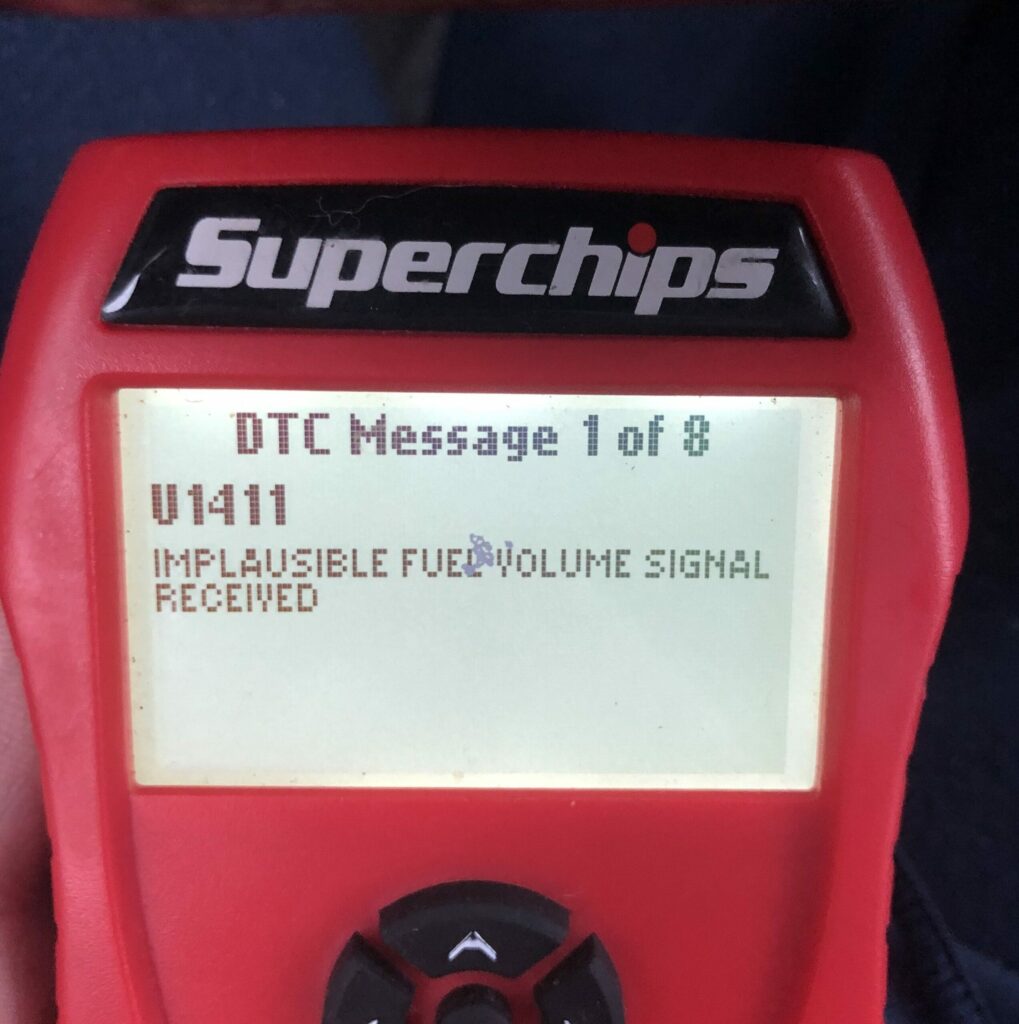
(Image credit: Jeep Garage – Jeep Forum)
When the FCM in your Jeep fails to receive a fuel volume signal from the Cluster Module over the CAN B bus, it sends a fuel volume signal to the PCM over the CAN C bus. However, if the PCM determines that the signal sent by the FCM over CAN C is implausible or inconsistent, it will result in the U1411 code being triggered.
It’s worth noting that the U1411 code is most commonly found in these Jeep models: Jeep Grand Cherokee (2005, 2006), Jeep Liberty (2006), and Jeep Commander. Additionally, it is commonly associated with other codes such as P0157 (Oxygen Sensor Circuit Low Voltage Bank 2 Sensor 2), U110C (Lost Fuel Volume Message), and U110E (Lost Ambient Temperature Message).
Read more: Dodge, Chrysler, and Jeep OBD1 Codes and OBD2 Codes [Full PDF Free Download]
Assessing The Severity: Is It Safe To Drive With The U1411 Jeep Code?
The severity level of the U1411 code in your Jeep can be considered moderate. While this code typically indicates an issue with the fuel volume signal, it is not a critical or immediate danger to your safety.
It is generally safe to drive with this code. However, it is important not to ignore the U1411 code and address it promptly. Ignoring the code may lead to potential fuel delivery problems, affecting your Jeep’s performance and fuel efficiency. It is advisable to have the issue diagnosed and repaired as soon as possible to prevent further complications.
U1411 Jeep Symptoms: How The Code Manifests In Your Jeep
The U1411 code in your Jeep may manifest itself through various symptoms, indicating an issue with the fuel volume signal. Keep an eye out for the following signs:
- Illumination of the Check Engine Light (MIL)
- Difficulty starting the engine
- No crank condition
- Poor fuel economy
- Stalling or hesitation during acceleration
- Loss of power
- Inaccurate fuel gauge readings
- The instrument cluster remains inactive after remote start until the key is inserted and turned on
Read more: Jeep Dashboard Symbols and Meaning (FULL list, Free Download)
Exploring The Causes Of the U1411 Code
To effectively diagnose and resolve the U1411 code in your Jeep, it is important to understand its potential causes. The following are common culprits associated with this code:
- Ignition switch issues
- Remote starter problems
- Open or shorted CAN C Bus circuit
- Failed instrument cluster module
- Faulty FCM
- Defective PCM
- CAN C module problems
Diagnosis And Repair: Resolving The U1411 Code Like A Pro
In this section, we’ll provide you with the tools, parts, step-by-step guide, and estimated costs to resolve the U1411 code in your Jeep. Let’s begin.
Essential Tools And Parts
To diagnose and repair the U1411 code, you may need the following tools and parts:
- OBD-II scanner
- Di-electric cleaner
- Replacement ignition switch (if needed)
- Replacement parts for wiring, connectors, circuits, PCM, Instrument Cluster, and FCM (as required)
Step-by-step Procedure
The procedure is divided into two parts, Basic and Advanced, to ensure a comprehensive and systematic approach to troubleshooting and resolving issues.
Basic Steps
Trying out the following steps in many situations can often resolve the issue.
You can give them a shot in the comfort of your own home before deciding whether to take your car to a repair shop or dealer.
These steps are accessible to those with beginner to intermediate skill and knowledge levels:
Step 1: First, check the ignition switch for malfunction or damage. Replace it if necessary.
Step 2: If your Jeep has a remote starter, ensure it is installed and functioning properly. Reprogram or replace it if needed.
Advanced Steps
If you have completed the basic steps and the U1411 code persists, doing more advanced troubleshooting that involves working with complex wiring and specific components may be necessary.
Please note that these steps require advanced automotive knowledge and skill. It is recommended to seek assistance from a qualified mechanic or automotive professional with the expertise to perform these tasks accurately and safely.
Step 1: Inspect the wiring and connections related to the CAN bus system, including the CAN C Bus circuit. Repair or replace any damaged or faulty wiring, connectors, or circuits.
Step 2: Perform a thorough check on the PCM using the following steps:
- Disconnect all PCM connectors carefully.
- Use a di-electric cleaner to spray and clean all PCM connections.
- Allow the cleaner to sit and dry.
- Clean the exposed large cable behind the fuse box under the hood on the driver’s side. Let it sit overnight alongside the disconnected PCM cables.
- Reconnect the cables and check if the U1411 code is reset. If not, reprogram or replace the PCM module.
Step 3: Inspect the instrument cluster module for damage or malfunction. Ensure it is properly connected and all wiring is in good condition. Replace or repair as needed.
Step 4: Perform the same inspection with the FCM. Replace or repair if necessary.
Step 5: Clear the U1411 code using an OBD-II scanner and test drive the vehicle.
How Much Does It Cost To Fix The U1411 Jeep Code?
The cost of repairing the U1411 code in a Jeep can vary depending on the specific cause and the parts that need replacement. Below is a table showing estimated costs for some common repair tasks related to the U1411 code based on the troubleshooting steps mentioned earlier.
| Repair Task | Estimated Cost Range |
| Wiring and connector inspection/repair | $100 – $500 |
| Ignition switch replacement | $150 – $300 |
| Remote starter repair/reprogram | $100 – $300 |
| Powertrain Control Module (PCM) inspection/repair/replace | $500 – $1,500 |
| Instrument cluster module inspection/repair | $300 – $800 |
| Front Control Module (FCM) inspection/repair | $300 – $800 |
Remember that these estimated costs are subject to variation depending on factors such as labor rates and the Jeep model. Consulting with a qualified mechanic will provide you with a more accurate estimate tailored to your specific situation.
U1411 Jeep Infographic

Final Thoughts
Congratulations! You now have a solid understanding of the U1411 Jeep code, from its meaning to symptoms, causes, and possible repair procedures. Armed with this knowledge, you’re better equipped to tackle this issue should it arise in your vehicle.
Remember, if you’re unsure about performing the diagnosis and repair yourself, it’s always wise to seek the expertise of a professional mechanic. They have the experience and specialized tools to accurately diagnose the problem and ensure a proper fix.
We hope this guide has been helpful to you. If you found it informative, don’t hesitate to share it with fellow Jeep owners who may benefit from this knowledge. Feel free to leave any questions or comments below. Happy driving!
Reference Sources
- Zinref.ru, Jeep Grand Cherokee WK. Manual – part 1130.
- RepairPal, DTC Code U1411.
- JustAnswer, Question about U1411 Code in 2006 Jeep Commander Code.
U1900 Ford Code: CAN Communication Bus Fault
U1900 Ford Code: CAN Communication Bus Fault
Discover the ins and outs of the U1900 Ford code with our expert guidance.
If you own a Ford vehicle and have encountered this code, understanding its meaning, severity, symptoms, causes, and the necessary steps for diagnosis and repair is crucial.
You’re in good hands! Count on our experience and expertise as we provide you with valuable insights to help you deal with the code.
So, let’s dive in!
U1900 Code on Ford: An Overview
Here’s a brief overview of the U1900 Ford code:
- Definition: CAN Communication Bus Fault (Receive Error)
- Severity: Low
- DIY Skill Level: Intermediate
- Continue To Drive?: Yes
- Estimated Repair Cost: $0-$200
U1900 Ford Code Meaning: What Does It Signify?
The U1900 code on Ford indicates a failure in the communication bus. When the bus fails to receive a specific error or cannot relay that message to the powertrain control module (PCM), it triggers this error code. This can be caused by a communication failure between various components within the system.
In certain cases, this code is commonly found in models such as the Expedition, Explorer, F150, F250, and Focus. The CAN (Controller Area Network) serial communication system connects all the control modules in a Ford vehicle. However, U1900 primarily refers to communication failures within the circuits connecting the PCM, ABS control module, and instrument cluster. If any of these parts fail to transmit their signals to the PCM, the U1900 code may appear.
Note: The Ford U1900 code can occasionally be a “ghost code,” appearing when connecting a scanner to the data link connector with the ignition on or while the engine is running.
U1900 Ford Code Severity: Assessing Its Impact
The severity level of the U1900 fault code is low to medium. Many experienced mechanics and vehicle owners have reported that this code does not pose a significant concern.
In fact, it is often considered a “ghost code” (as noted above) or a result of the diagnostics process itself rather than an actual fault. However, it is worth mentioning that there might be other Ford-specific stored codes that may not be detected by a generic code reader.
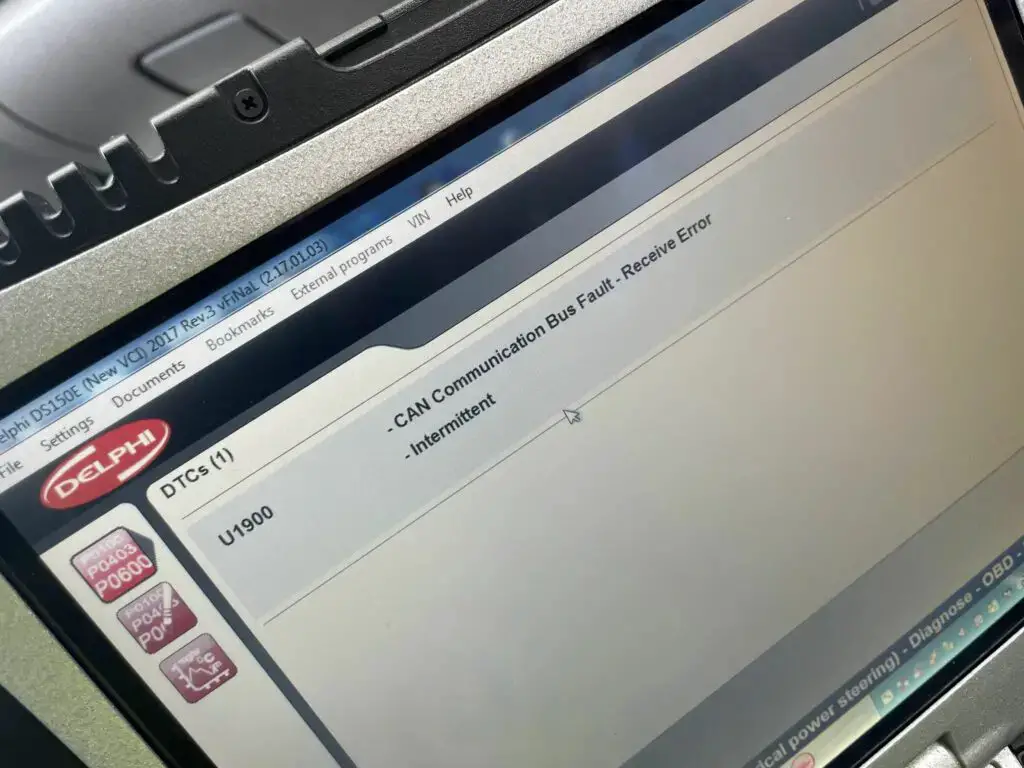
(Image credit: Ford Owners Club)
Considering the widespread occurrence of this code and the general consensus among owners, there is no immediate cause for alarm. If your vehicle displays the U1900 code only without any apparent performance or drivability problems, it is generally safe to continue driving. However, it is advisable to monitor the vehicle’s performance and address any other related codes or symptoms that may arise.
U1900 Ford Code Symptoms: What To Look Out For
The U1900 Ford code typically does not cause specific symptoms or drivability issues on its own. However, in worst cases, it may be accompanied by these signs:
- Illumination of the check engine light and other dashboard lights like the ABS light or AWD light
- 4WD system malfunction (common in 4WD-equipped Ford applications)
- Potential no-start condition (especially on F-series trucks)
Read more: Ford Dashboard Symbols and Meaning (FULL list, Free Download)
Exploring U1900 Ford Code Causes
Common causes of the U1900 code include:
- Loose wiring connections
- Communication failure within the CAN system
- Faulty ABS control module
- Malfunctioning instrument cluster (possible racks in joints, connector pins, or pads on the printed circuit board)
- Issues with the trailer brake controller
Read more: Ford OBD2 Codes List for FREE Download
U1900 Ford Code Diagnosis And Repair
If you’re sure that the U1900 code is not a “ghost code” and it is affecting your driving experience, follow these steps to address the issue effectively.
Essential Tools And Parts
- OBD-II scanner
- Multimeter
- Wiring diagram for the vehicle
- Electrical contact cleaner
- Replacement wiring connectors (if necessary)
- Diagnostic manual for the specific vehicle model
Step-by-Step Guide
- Connect the OBD-II scanner and retrieve any stored codes.
- Inspect the wiring connections related to the U1900 code.
- Use a multimeter to check for continuity and proper voltage levels.
- Check for loose or damaged wiring connectors and repair or replace them as needed.
- Inspect the ABS control module, instrument cluster, and trailer brake controller for any visible signs of damage or malfunction.
- Clean the electrical contacts and ensure proper connections.
- Perform a thorough inspection of the CAN bus system and related components.
- If necessary, consult the vehicle’s diagnostic manual for specific troubleshooting steps.
DIY Repair Level And Estimated Costs
The DIY repair level for the U1900 Ford fault code is moderate to advanced. You can try basic troubleshooting and inspections, but seeking professional assistance is advisable for complex electrical systems.
The estimated costs for repairing the U1900 code may vary depending on the specific cause and required repairs. Costs can range from minimal expenses for simple wiring repairs to higher expenses if components like the ABS control module or instrument cluster need replacement.
Here is a rough cost estimate for common repair tasks:
| Repair Task | Cost Range |
| Wiring repairs | $50 – $200 |
| ABS control module replacement | $200 – $600 |
| Instrument cluster replacement | $300 – $800 |
| Trailer brake controller replacement | $100 – $400 |
Please keep in mind that these cost ranges are approximate and can vary depending on various factors, such as the specific vehicle model, location, and labor rates. Consult a qualified mechanic or technician to get an accurate diagnosis and cost estimate for your vehicle.
Wrapping Up
In conclusion, the U1900 Ford fault code is generally not a big problem – if you have insights and knowledge about it.
You can fix the code and get everything back to normal by following the steps we’ve provided. If you’re uncomfortable working with electrical systems, it’s best to ask for help from a professional.
We hope this guide has been helpful to you. If you have any questions, feel free to ask in the comments below!
Reference Sources
- JustAnswer, U1900+dtc.pdf.
- Vehicle History, What does the Ford C-Max fault code U1900 mean?
- ACTRONICS LTD, Ford Focus instrument cluster – U1900 fault.
- TroubleCodes.net, U1900 – CAN Communication Bus Fault.
- FORScan forum, U1900 – CAN communication bus fault
- JustAnswer, Fix U1900 code.
- Ford Owners Club, U1900 code, I’ve tried everything.
U0415 Code: Understanding, Diagnosing, And Fixing
U0415 Code: Understanding, Diagnosing, And Fixing
You’re facing the U0415 code on your car’s diagnostic display? Don’t let it overwhelm you – The U0415 code is a common diagnostic trouble code that relates to the Anti-Lock Brake System Control Module in vehicles.
Understanding the meaning, symptoms, causes, and repair procedures associated with the U0415 code is essential for maintaining safe driving conditions. In this article, I will present all of them and offer insights into DIY repairs and estimated costs.
Let’s dive in!
U0415 Code: A Quick Overview
Check the U0415 code summary provided below!
- Definition: Invalid Data Received From Anti-Lock Brake System (ABS) Control
- Severity: Medium
- DIY Skill Level: Intermediate
- Continue To Drive?: No
- Estimated Repair Cost: $50 – $500
What Does The U0415 Code Mean?
The U0415 code is a generic diagnostic trouble code (DTC) that represents “Invalid Data Received from Anti-Lock Brake System (ABS) Control Module.” It is triggered when the vehicle’s Powertrain Control Module (PCM) detects an irregular or erroneous signal from the ABS control module.
The ABS control module is responsible for monitoring the rotational speed of each wheel and ensuring optimal braking performance. It receives input from individual wheel speed sensors, which measure the rotational speed of each wheel. The module compares the rotational speed of each wheel many times per second.
In normal conditions, the wheels should rotate at the same speed, especially when the brakes are applied. However, if the wheels do not slow down at the same rate, such as when some wheels are on the road surface and others are off, the ABS control module will release the braking force on the wheels that are off the road surface to maintain steering control of the vehicle.
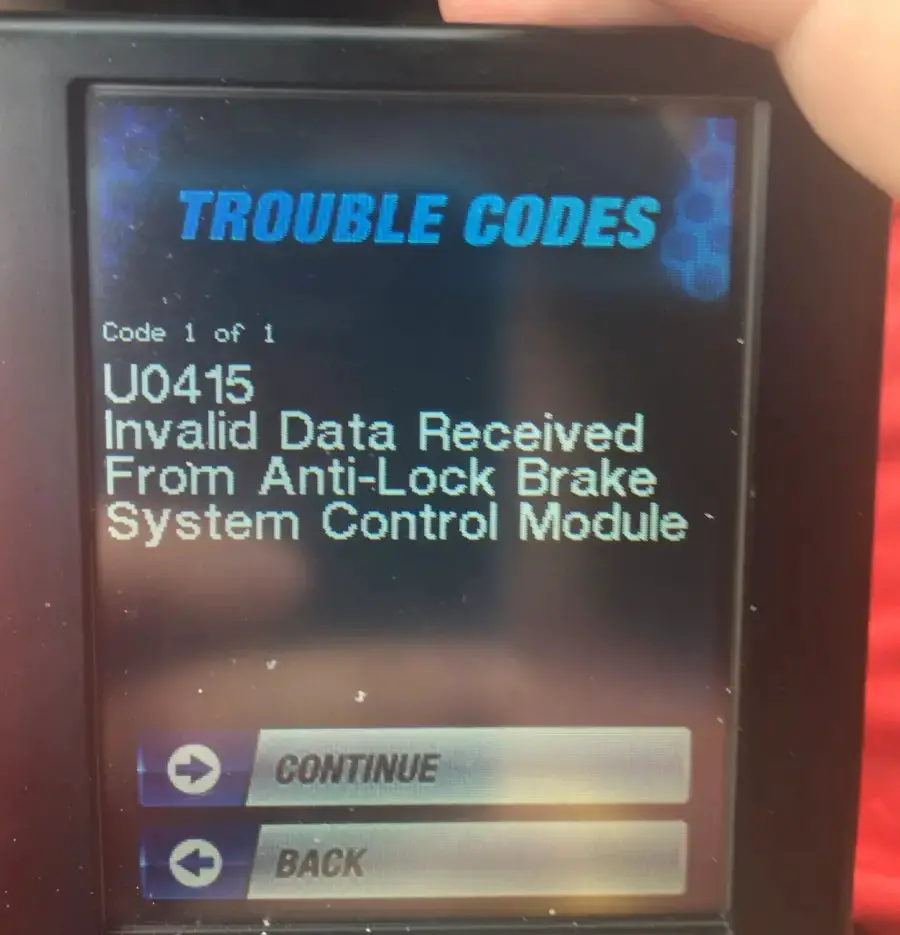
The PCM requires valid data from the ABS system via the wheel speed sensors to control the brake system effectively. If the PCM detects implausible or invalid data from the ABS, it will set the U0415 code and illuminate a warning light. In most cases, the ABS system will be disabled until the fault is corrected.
There may be additional codes related to individual wheel speed sensors, including C0544, C0031, C0045, etc. These codes can help pinpoint specific sensor issues.
While the U0415 code can occur in various vehicles, it is more commonly associated with brands such as Chevrolet, Ford, Dodge (Dart), Mazda, Honda, Jeep, Toyota, GM, Chrysler, and others. Please note that the specific definitions can vary slightly between different brands.
How Severe Is The U0415 Code?
The severity level of the U0415 code is moderate. While it does not pose an immediate safety risk, it can affect the proper functioning of the vehicle’s anti-lock brake system. The ABS system is crucial for maintaining control and stability during braking, especially in emergency situations or on slippery surfaces.
It is not recommended to continue driving with the U0415 code illuminated. When this code is present, the ABS system may be disabled, increasing the risk of wheel lock-up and potential loss of control during braking. It is advisable to have the vehicle inspected and repaired by a qualified technician as soon as possible to restore the ABS functionality and ensure safe driving conditions.
What Are The Symptoms Of The U0415 Code?
When the U0415 code is present, the following symptoms may be observed:
- Check engine light (MIL) ON
- ABS warning light illuminated
- Loss of ABS functionality
- Possible decrease in braking performance
What Are The Causes Of The U0415 Code?
The U0415 code can be caused by various factors, including:
- Wiring or connector issues in the ABS system
- Damaged or faulty ABS control module
- Malfunctioning wheel speed sensors
- Defective ABS pump or valve body
- Faulty PCM (rarely)
It is important to note that these are general causes, and a proper diagnosis is necessary to determine the exact source of the U0415 code in a specific vehicle.
Read more: P1777 Nissan Code: A Practical Repair Guide
How To Diagnose And Fix The U0415 Code In Your Vehicles?
When encountering the U0415 code, a comprehensive diagnostic and repair process can assist in resolving the problem. Here, we provide an outline of the necessary tools and components, a step-by-step guide, and an evaluation of the feasibility of DIY repair:
Essential Tools and Parts
To diagnose and repair the U0415 code, the following tools and parts may be required:
- OBD-II scanner/code reader
- Multimeter
- Wheel speed sensor(s)
- ABS control module (if necessary)
- Wiring repair kit
- Electrical connectors and terminals
- Basic hand tools (wrenches, sockets, etc.)
Step-by-Step Procedure
- Connect an OBD-II scanner/code reader and retrieve the U0415 code and any others.
- Inspect the ABS control module wiring and connectors for any visible damage or loose connections. Repair the issues, if any.
- Test the wheel speed sensors using a multimeter to check for proper resistance and signal output.
- If a faulty wheel speed sensor is identified, replace the sensor as necessary.
- If no issues are found with the wiring or sensors, further diagnosis of the ABS control module may be required.
- Consult the vehicle’s service manual to locate and remove the ABS control module.
- Install a new ABS control module, ensuring all connectors are properly connected. (It is highly recommended to locate a proficient mechanic for the execution of this type of task.)
- Clear the U0415 code with the OBD-II scanner/code reader and test the ABS system for proper functionality.
Note: Consulting your vehicle’s repair manual or seeking expert help is crucial if you have uncertainties about any step in the procedure. Furthermore, ensure to reset any trouble codes post-repairs and engage in a test drive to confirm the resolution of the problem.
Read more: C1109 Nissan Code: ABS Voltage Trouble Exposed
DIY Repair Level And Estimated Costs
The repair procedure for the U0415 code can vary in complexity. Basic tasks such as inspecting wiring and connectors, as well as replacing wheel speed sensors, can be tackled by DIY enthusiasts with intermediate mechanical skills. However, diagnosing and replacing the ABS control module may require advanced knowledge and specialized tools.
Estimated costs for repairs related to the U0415 code can vary widely depending on the specific vehicle and components involved. Here is a table outlining approximate costs:
| Repair Task | Estimated Cost |
| Wheel speed sensor replacement | $50 – $100 |
| ABS control module replacement | $200 – $500 |
| Wiring repair | $50 – $150 |
| Professional diagnosis | $100 – $200 |
Keep in mind that these are rough estimates, and actual costs may differ. Additionally, if unsure or uncomfortable with the repair process, it is recommended to seek assistance from a qualified mechanic to ensure proper diagnosis and repair of the U0415 code.
U0415 Infographic

Final Thoughts
And that’s a wrap on understanding the U0415 code! Dealing with car issues might seem tricky, but armed with the right info and tools, you can handle it.
Got questions or stories about this code? Share them in the comments – let’s chat! If this guide helped you, pass it on to pals who love tinkering with cars. Until next time, happy fixing and safe driving!
Learn more about other codes by using our OBD lookup tool!
Reference Sources
- MyCarDoesWhat.org, Anti-lock braking system
- J.D. Power, What is a front-wheel speed sensor?